Surroundings

DINOSAUR FOOTPRINTS - CALORCKO

The area contains an impressive group of different species dinosaur footprints located in the almost vertical calcareous wall of Calorcko. Investigations suggest that they are 65 million years old, belonging to the Cretaceous period. The land was raised and tilted many millions of years later due to drastic geologic changes.

There are examples of both biped and quadruped prints, indicating that the different species co-inhabited the area, including the mighty Rex Tyrannosaurus.

The cretaceous park, recently built, shows models of dinosaurs made  with the latest informationa available in the world.

TARABUCO

Tarabuco is possibly one of the few places in Bolivia where ethnical and traditional culture characteristics, are maintained. The ‘Tarabuqueños’ have inhabited a great part of what are now the provinces of Oropeza and Yamparaéz in the department of Chuquisaca since Incan times.

Today the inhabitants of Tarabuco retain their ethnic peculiarities, conserving the full validity of their folkloric expressions, their traditional dress, their customs, their language and fundamentally their inherited colorful textile craft.

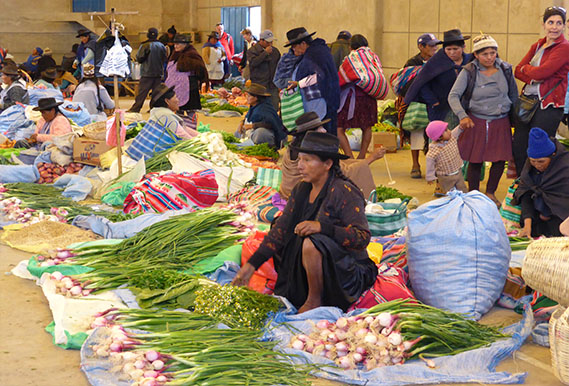
Every Sunday there is a fair in Tarabuco. The natives from all nearby communities converge, dressed in their typical clothes to make purchases and for social exchange. It is one of the few places where people are still bartering. On such days it is possible to purchase beautiful fabrics direct from the makers.

CANDELARIA

CandelariaCandelariaCandelariaCandelariaCandelariaCandelariaCandelariaCandelariaCandelariaCandelariaCandelariaCandelariaCandelariaCandelariaCandelariaCandelariaCandelariaCandelaria

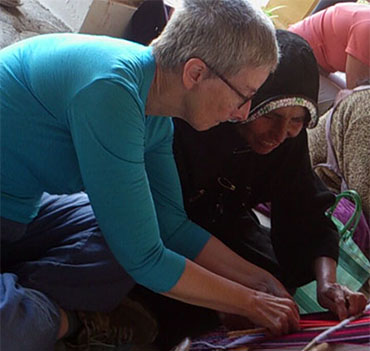
This typical Spanish country property conserves the structure of colonial agricultural production of these latitudes. Its imposing patio and rustic chapel, with solid walls, are silent witnesses to the passage of time. Candelaria and its surroundings have been, until today, important centers for the production of handmade textiles with their own special characteristics, where weavers and people can be seen in their own environment. The Hacienda is a great location to admire the different techniques, combinations of colors and ornamental designs that characterize the work of indigenous communities of the country.

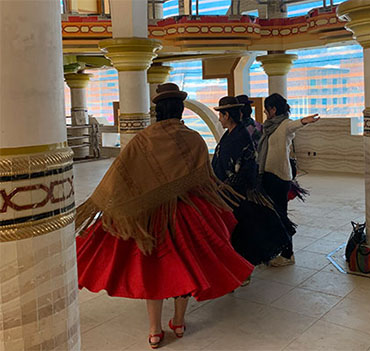
In the hacienda it is also possible to see displays of the typical autochthonous dance, the Phujllay. Accommodation and local food are things to enjoy in their purest countryside way, as well as the peaceful environment.

ICLA

Fifteen KM. further Candelaria is the small valley town of Icla, where besides having a bath under a natural waterfall, it's possible to walk and see the unique Icla Canyon, a natural geological rock formation. The area is also rich in fossils from the quaternarian period. There are also parrots nesting throughout the Canyon.

CASTLE OF LA GLORIETA

La GlorietaLa Glorieta

Built by the "Prince of the Glorieta" Don Francisco Argandoña and his wife, it is located 5 kilometers from Sucre on the road to Potosí. The palace is considered to be an interesting example of the European eclectic architecture of the last third of the 19th Century.

In the different parts of the building are examples of diverse architectural styles: Gothic, Renaissance, Byzantine, Arabic, Florentine, Baroque, etc.

Although the castle is not in the best conditions, it is a peculiar construction for a country with no royal past.

QUILA-QUILA, POTOLO, MARAGUA

QUILA-QUILA, POTOLO, MARAGUAQUILA-QUILA, POTOLO, MARAGUA

Those are indigenous communities belonging to the Jalq'a ethnical group. They maintain the elements of their traditional culture in the architecture of the houses, the agricultural techniques and especially in the handmade textile production, which is totally unique.

In Maragua, there are Inca trails, indigenous sanctuaries, Indian villages and one of the highlights is a volcanic crater.  In the surroundings there are several places where dinosaur tracks and archaeological sites can be seen.

The town of Quila Quila bears evidences of the struggle between pre-Hispanic and colonial cultures.

INCA TRAIL

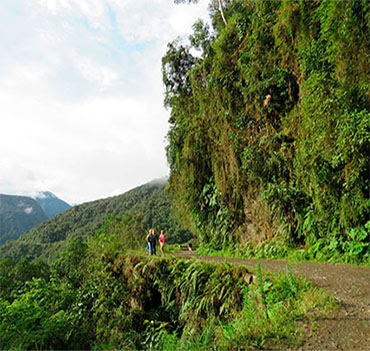
The trail covers a distance of approximately 6 kilometers, descending from the summit of the mountains of Chataquila to the valley of Chaunaca. For much of its length the path follows a deep ravine. Completely paved in immense rocks, it also presents substantial retaining walls and fords. Along this old route the leader of Tomás Katari's 1781 Indian rebellion was executed.

INCAMACHAY

There are many rock paintings that possibly belong to the Sauces culture of approximately 2500 years ago. Similar to the representations of Pumamachay, they occur in a fascinating erosion sculpted mountain landscape that presents curious and surprising landforms.

PUMAMACHAY

The area has some interesting pictographs that correspond to the Huruquilla culture, which has an approximate age of 1500 years.

You are visitor number:46326